
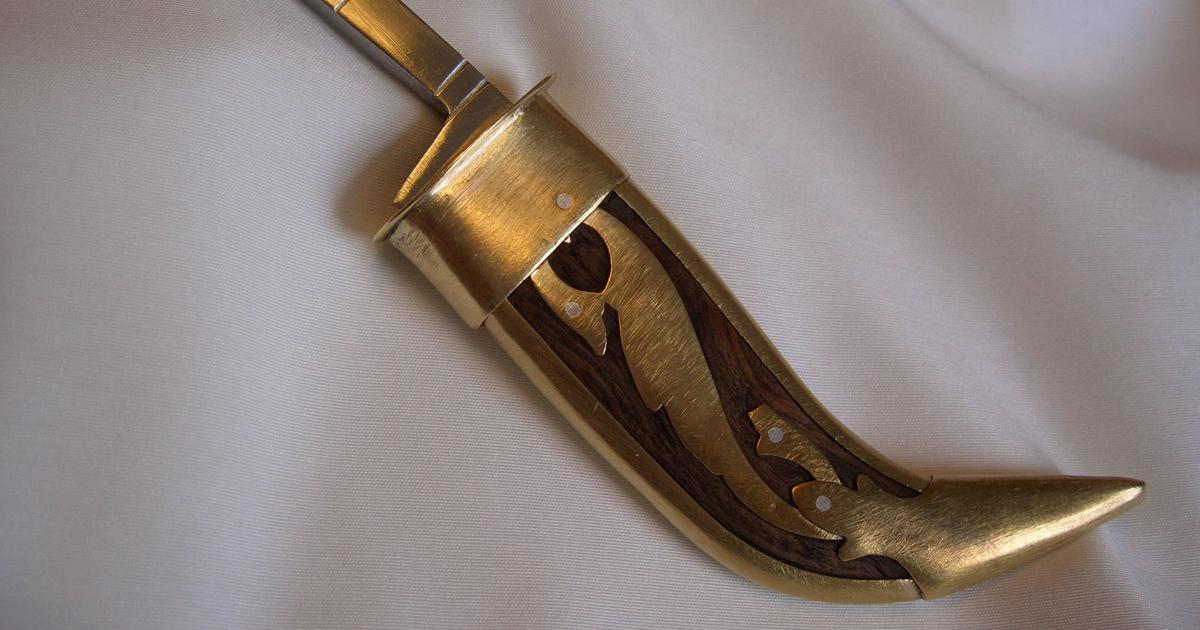
Australia’s New South Wales government has put a temporary ban on Sikh students carrying a kirpan in public schools. The kirpan is a ceremonial dagger baptised Sikhs carry to symbolise their duty to stand up against injustice.
The ban was put in place after a 14-year-old boy used a kirpan to stab a 16-year-old at a high school in Sydney.
New South Wales Premier Gladys Berejiklian said “students should not be allowed to take knives to school under any circumstances”.
But framing the controversy as whether or not students should be allowed to take knives to school oversimplifies a complex issue. This issue is not just about knives in schools. It is also about what it means to be a secular school in a multicultural and multi-faith Australia.
Matter of faith
There is a long history of controversy over wearing religious symbols in Australian schools, both religious and secular.
In 2017 the family of a Sikh boy launched legal action against his school after the Christian college banned the boy from wearing a patka (a turban worn by children). The Victorian Civil Administrative Tribunal later ruled the school breached the Equal Opportunity Act.
In 2018 the Secular Party of Australia brought a case against the Victorian education department alleging the department had discriminated against a child by permitting her to wear “religious style clothing that covered her body, leaving only her face and hands exposed”. The case failed.