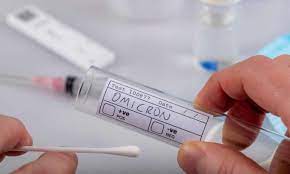
On Friday Nov. 19, Raquel Viana, Head of Science at one of South Africa’s biggest private testing labs, sequenced the genes on eight coronavirus samples – and got the shock of her life.
The samples, tested in the Lancet laboratory, all bore a large number of mutations, especially on the spike protein that the virus uses to enter human cells.
“I was quite shocked at what I was seeing. I questioned whether something had gone wrong in the process,” she told Reuters, a thought that quickly gave way to “a sinking feeling that the samples were going to have huge ramifications”.
She quickly picked up the phone to her colleague at the National Institute for Communicable Diseases (NICD) in Johannesburg, gene sequencer Daniel Amoako.
“I didn’t quite know how to break it to them,” she recalls. She told Amoako, “To me, it looks like a new lineage.”
The discovery of the Omicron variant in southern Africa has caused global alarm, with countries limiting travel from the region and imposing other restrictions for fear it could spread quickly even in vaccinated populations.
Amoako and the team at the NICD spent the Nov. 20-21 weekend testing the eight samples which Viana sent them, all of which had the same mutations, he told Reuters on Tuesday.
It was so bizarre that Amoako, his colleague Josie Everatt and other colleagues also thought it must be a mistake. Then they remembered that over the week, they’d noticed a sharp rise in COVID-19 cases, of the sort that might indicate a new mutant.
In addition, Viana had been alerted to an oddity in the sample earlier this month by a colleague – an S-gene dropout, one of the mutations that now distinguishes the new Omicron variant of the coronavirus from the globally dominant Delta one.
The only common variant with that feature was Alpha, “and we hadn’t seen Alpha (in South Africa) since August,” Everatt recalls thinking as they tested the samples.
By Tuesday, Nov. 23, after testing another 32 from around Johannesburg and Pretoria, “it was clear,” Amoako said.
“It was scary.”