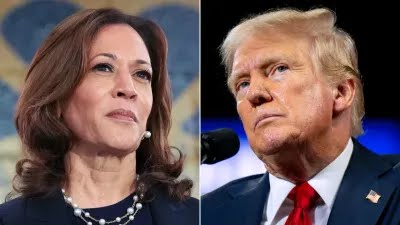
New Delhi, Nov 04: As the United States stands on the cusp of another presidential election, the world is watching the outcome closely and intently. With less than 24 hours left for Election Day on Tuesday, November 5, the political tension within America is gripping not only the country but also increasing concern among close global allies.Vice President Kamala Harris is fighting against former President Donald Trump. The two candidates represent different visions for America’s future. As suggested by analysts and key political observers, the polls and competition will be neck and neck.The stakes are too high for both candidates, as both their teams and lobbyists are massively campaigning for a last push in critical swing states to win voters. These swing states are seen as deciding factors for the victory of the future US President.Over 75 million Americans have already cast their ballots in early voting, reflecting extraordinary engagement in the current elections. The candidates have made their closing arguments with full force and ideology. Now it’s up to the voters to decide which vision they believe and want to accept. Will the country lean towards a return to republican candidate, Trump’s populist nationalism, or embrace Democrats Harris’s call for unity and progress?Whatever the result, the challenges awaiting America’s next president are significantly large and not only include domestic concerns like inflation, and immigration but also international issues like the Russia-Ukraine war, the West Asia conflict, that directly affect the US security issues of their population and citizens. In addition, climate change, and global economic stability also continue to remain demanding issues. Political analysts and poll opinions suggest that the winner will have to navigate a divided Congress, deep-seated public discontent, and an electorate wary of the institutions that govern them.In the last leg of their respective election campaign, both Harris and Trump focused on battleground states that may tip the balance. Trump, known for his fervent rally crowds, made stops in Pennsylvania, North Carolina, and Georgia, while Harris campaigned across Michigan, including at a Detroit-area church, to reach out to communities’ key to the Democrats’ strategy. Trump has revived his combative style, accused the “fake news” media, and stirred up his base by alleging election fraud, while Harris has adopted a message of unity and optimism, urging voters to shape the future of the nation.Swing states play a critical role, and both candidates know it. Harris, addressing young voters at Michigan State University in East Lansing, framed this election as “one of the most consequential of our lifetime,” striking a chord with voters who, she argues, can be part of a transformative movement. Her appeal is based on “common ground and common-sense solutions,” focusing on issues such as climate change, healthcare, and economic opportunity, which resonate strongly with younger and minority voters in Michigan.

Trump, Harris make final push in a bid to get crowned as next U.S president




Recent Posts