
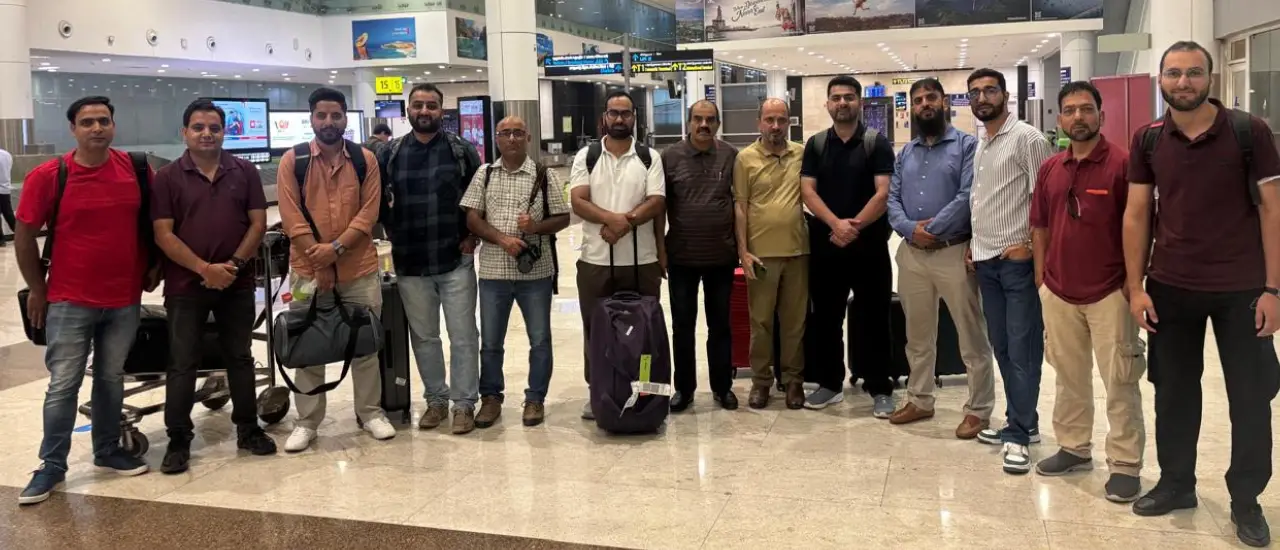
SRINAGAR: Two media delegations from Jammu and Kashmir, organised by the Press Information Bureau (PIB), Srinagar and Jammu, respectively, explored significant archaeological and cultural heritage sites in Madhya Pradesh and Tamil Nadu as part of ongoing press tours aimed at providing journalists first-hand exposure to India’s diverse history, culture and developmental landscape.
A 10-member delegation from Jammu began its Madhya Pradesh tour on September 14 with visits to the historic Siva Temple at Bhojpur and the prehistoric rock shelters of Bhimbetka, a UNESCO World Heritage Site. The delegation is scheduled to continue its tour in Bhopal and Indore, covering other significant cultural and developmental locations.
At Bhojpur, the journalists were briefed on the history and architectural character of the imposing Siva Temple located on the banks of the Betwa River. Officials accompanying the delegation explained the monument’s distinctive architectural features, massive stone construction and the enormous Shiva Lingam housed in its sanctum.
Particular attention was drawn to the unfinished character of the temple, which provides important evidence of the construction techniques, craftsmanship and architectural practices of its period. The journalists were also briefed on efforts to preserve the monument as part of Madhya Pradesh’s archaeological heritage.The delegation then travelled to Bhimbetka, one of India’s most important prehistoric archaeological sites. Archaeologist Vishnu Shridhar Wakankar discovered the site in 1957-58. About 750 rock shelters have been identified in the area, with hundreds containing prehistoric paintings.
During the visit, the journalists were shown several shelters and briefed on paintings depicting hunting, gathering, animals, dancing and other aspects of prehistoric life. Executed largely with natural pigments, the paintings offer an important record of early human habitation and artistic expression.The archaeological evidence at Bhimbetka extends across a long span of human history, with the shelters preserving evidence of human activity from prehistoric times through later periods. The visit enabled the journalists to examine directly a heritage record that is often encountered only through written accounts, photographs and archival material.