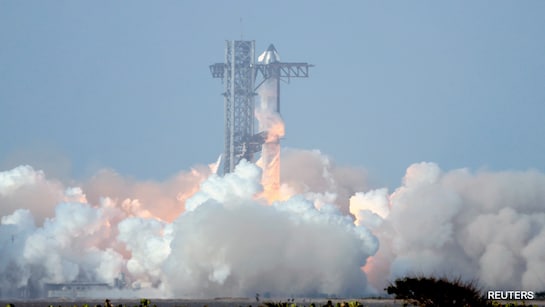
Starship, the futuristic SpaceX rocket vehicle on which Elon Musk’s ambitions for multiplanetary travel are riding, roared into space from Texas on Tuesday on its ninth uncrewed test launch, flying farther than the last two attempts that ended in explosive failure.The two-stage spacecraft, consisting of the Starship vessel mounted atop a towering SpaceX Super Heavy rocket booster, blasted off at about 7:36 p.m. EDT (2336 GMT) from the company’s Starbase launch site on the Gulf Coast of Texas near Brownsville.A live SpaceX webcast of the liftoff showed the rocketship rising from the launch tower into the early evening sky as the Super Heavy’s cluster of powerful Raptor engines thundered to life in a ball of flame and billowing clouds of exhaust and water vapor.SpaceX launched the Starship system with a previously flown Super Heavy booster for the first time, aiming to achieve a key demonstration of its reusability.As expected, the 232-foot (71-m) first-stage rocket separated from the upper-stage Starship vehicle several minutes after launch and headed back toward Earth.But SpaceX controllers lost contact with the booster during its descent before it presumably plunged into the sea instead of making the controlled splashdown the company planned.

Elon Musk’s Megarocket Fails, Starship Crashes After Its Farthest Flight





Recent Posts